
Key Takeaways
- Pipeline recruiting (steady candidate flow) beats reactive recruiting (panic posting when someone quits)
- Four pipeline components: referrals, CNA school partnerships, social media leads, community presence
- A referral program promoted monthly produces the highest-retention hires at $150–250/hire
- CNA schools graduate new classes every 6–8 weeks — get on the program director's list
- One hour per week on pipeline maintenance prevents 10 hours of crisis recruiting
Pipeline vs. Reactive Recruiting
Reactive recruiting is expensive. When a CNA leaves and you need to fill the position immediately, you post everywhere, pay whatever the platform asks, and take the first acceptable candidate. Urgency kills negotiation leverage and quality standards.
Pipeline recruiting looks different. It produces a small but steady flow of candidates even when you don't have an immediate opening. When someone leaves, you have people in various stages of conversation — some warm, some just introduced — rather than starting from zero.
Building that pipeline doesn't require a dedicated recruiter or a large budget. It requires four consistent practices that compound over time.
Component 1: A Referral Program That People Actually Know About
Every home care agency claims to have a referral program. Most active caregivers don't know it exists or can't remember the terms.
The structure matters less than the promotion. A $150 bonus paid at 90 days is fine. What makes it work is mentioning it every month — in a text to your active caregivers, at orientation for new hires, during check-in calls. The message is simple: "If you know someone who'd be a good fit, send them our way and you'll get $150 when they hit 90 days."
Referral hires arrive pre-qualified in a meaningful sense. They know what the job is because someone they trust told them. They have a social connection to your agency before day one. And they typically stay longer than job board hires for both of those reasons.
Budget: $150–250 per hire, paid only on results. No upfront spend.
Component 2: CNA School Relationships
CNA certification programs graduate new classes every six to eight weeks. New graduates are actively looking for placements. They haven't posted resumes anywhere yet. And the program director often has significant influence over where graduates apply.
Getting on a program director's list of recommended agencies requires almost no investment: an email, a visit, a thank-you when you hire a graduate. Most programs will post your openings on an internal board for free. Some will invite you to graduation events or career days.
This channel is slow to set up — you need to build the relationship before the graduates materialize — but it produces consistent warm candidates once established. A relationship with two or three programs in your service area can reliably surface two to four new CNA candidates per month.
Budget: Your time. No cost per lead.
Component 3: Social Media Lead Generation
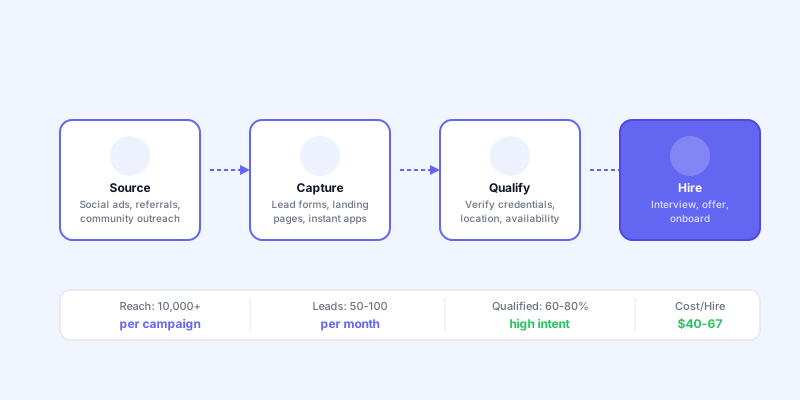
Social media lead generation — specifically Facebook and Instagram Lead Ads — reaches people who fit the caregiver profile before they've started a job search. This is the channel that accesses passive candidates: people who would consider caregiving work if it appeared in front of them, but aren't looking on Indeed today.
Running effective lead campaigns requires some skill. Ad creative needs refreshing every two to three weeks. Targeting needs calibration. But the cost structure is better than job boards: $8–15 per lead, versus $15–30 per click on Indeed with no guarantee of an application.
If you don't want to manage campaigns yourself, a managed service handles the creative, targeting, and delivery. At $10 per exclusive lead — meaning the lead goes only to you, not to competing agencies — the cost per hire runs $40–70 at typical conversion rates.
Social media leads take slightly more recruiter effort than job board applicants because the candidate hasn't self-identified as an active job seeker. A warm, conversational outreach (text rather than a formal call, ideally) converts better than a formal recruiter script.
Budget: Variable, but $10–15 per lead with a managed service. Pay only for results.
Component 4: Community Presence
Caregivers often come from communities where trust and word of mouth matter more than digital job boards. Churches, community centers, social service offices, and immigrant services organizations in your coverage area can put you in front of candidates who would never find you on Indeed.
This doesn't require a large time investment. A relationship with a community organization contact — someone who can mention your agency when a member is looking for work — produces occasional but high-quality referrals. These candidates typically have strong values alignment with caregiving work and, because they came through a trust network, tend to stay.
Budget: Your time and occasional small sponsorships if appropriate ($50–200 for a community event).
Putting It Together: What a Pipeline Looks Like in Practice
An agency with all four components running might generate, in a typical month:
- 2–3 referrals from existing caregivers
- 1–2 new graduates from CNA school partnerships
- 8–15 social media leads (exclusive, high-intent)
- 1–2 community-sourced candidates
Not all of these become hires. But the pipeline means that when you have an opening, you have people to call — not a job board posting and a countdown clock.
The Maintenance Requirement
Pipelines require maintenance. Referral programs need monthly reminders. School relationships need occasional check-ins. Social media campaigns need creative refreshes. Community relationships need nurturing.
The difference from reactive recruiting is that this maintenance can happen in small, consistent doses rather than in a crisis when someone gives notice. An hour per week on pipeline maintenance is worth significantly more than 10 hours of panic recruiting when a position opens unexpectedly.
If you want to add the social media lead component to your pipeline without managing campaigns in-house, Hesed delivers exclusive leads at $10 each — billed daily, no monthly minimum, pause when you're fully staffed.
Getting leads shouldn't be this hard.
5 free leads to start. $10/lead after. Card required to activate delivery. No contracts.
Start Free →