
Key Takeaways
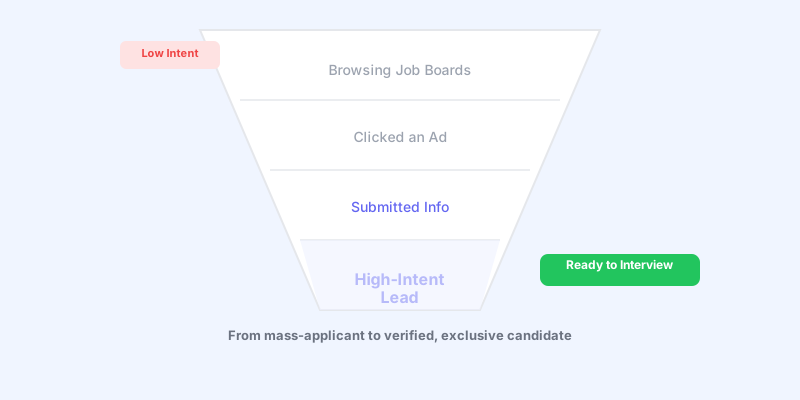
- A high-intent lead actively chose to engage with caregiving work — not a bulk job board applicant
- High-intent leads answer the phone more, show up to interviews, and stay past 90 days
- Exclusivity is the second variable: one lead, one agency, no competing recruiters
- $10/lead at 1-in-6 conversion = $60/hire vs $20/click at 1-in-35 = $700/hire on job boards
- Evaluate lead sources on: did they know it was caregiving? Did they opt in voluntarily? Are they exclusive?
Intent Is the Variable That Changes Everything
In sales, a "lead" who clicked an ad out of curiosity and a lead who requested a demo after reading a case study are both called leads. But they convert at wildly different rates, and treating them the same way wastes time on the first group while possibly under-serving the second.
The same distinction exists in recruiting. The word "lead" in hiring has come to mean any candidate whose contact information you have. But the intent behind that contact information — why they gave it, what they were responding to, how much they actually want the job — determines how likely they are to answer the phone, show up to the interview, and stay past 90 days.
What Low-Intent Looks Like
Job board applicants are typically low-intent in the recruiting sense of the term. That's not a judgment on their work ethic or suitability — it's a description of their behavior at the point of application.
On Indeed, a candidate can apply to 30 jobs with a single click using their saved resume. Many do. The application requires no particular commitment to any specific employer. The candidate is casting a wide net and waiting to see who responds first.
By the time your recruiter calls that person, they've already applied to your five closest competitors. They're comparing whoever calls fastest. Your agency's values, your caregiver culture, your approach to client matching — none of it has registered yet. You're just one of many calls they're expecting.
This is what produces the ghosting, the no-shows, the "I already accepted another offer" calls that frustrate agency recruiters. It's a structural feature of how job boards work, not a character flaw of the candidates.
What High Intent Looks Like
A high-intent lead is a candidate who encountered something specific to your agency (or at minimum, specific to caregiving work), understood something about what the role involves, and chose to submit their information in response.
In the context of social media lead generation, this typically means a candidate saw an ad targeting people who fit a caregiving profile — interest in healthcare, relevant demographics, location in your service area — read what the ad communicated about the work, and tapped "Submit." The friction is low, but the decision is active. They're not bulk-applying. They responded to this specific prompt.
That small difference in the origination of the lead has downstream effects that compound:
- Answer rate: High-intent leads answer the phone at higher rates. They're expecting a call and have some memory of why.
- Interview completion: They show up. They know what they signed up for in at least a general sense.
- 90-day retention: Candidates who chose you — even in a small way — before the recruiter called are more committed to the match than candidates comparing you to seven open tabs.
The Exclusivity Layer
Intent alone doesn't close the gap entirely. A high-intent lead who is simultaneously being called by four agencies is still in a competitive situation that shortcuts to "who offers the highest pay rate."
Exclusivity is the second variable that matters. An exclusive high-intent lead went to one agency. Your recruiter isn't racing someone else's recruiter to the same candidate. The conversation can be a real conversation — about the candidate's preferences, your agency's culture, what a good match looks like — rather than a sprint to extend an offer before a competitor does.
This is why the pairing of high intent and exclusivity produces such different recruiting outcomes than a job board that is inherently neither.
How to Evaluate a Lead Source on Intent
Ask these questions about any channel you're using:
- Did the candidate know they were engaging with a caregiving role specifically, or were they responding to a generic "jobs available" prompt?
- Did the candidate submit their information voluntarily, or did a platform auto-populate their application?
- Is this lead going to other agencies simultaneously, or exclusively to you?
- What did the candidate have to do to become a lead? (More steps = higher intent, generally)
The best lead sources produce candidates who answered yes to the first two and no to the third.
The Practical Implication
High-intent leads cost more per lead than low-intent leads, usually. But they cost less per hire. If you're paying $20 per job board click and converting 1 in 35 applicants to a 90-day hire, your effective cost per retained hire is over $700. If you're paying $10 per exclusive social lead and converting 1 in 6 to a 90-day hire, your cost is $60.
Intent is the mechanism. It's not marketing language — it's a measurable variable that predicts downstream hiring outcomes.
If you want to see what exclusive, high-intent caregiver leads look like for your market, start delivery here. $10 per lead, billed daily, pause anytime.
Getting leads shouldn't be this hard.
5 free leads to start. $10/lead after. Card required to activate delivery. No contracts.
Start Free →